Basilica Cistern · Tickets from €49
· Open 09:00–18:30
The history of Basilica Cistern
Basilica Cistern is one of the most important surviving Byzantine water structures in Istanbul. It was built during the reign of Eastern Roman Emperor Justinian I, who ruled from 527 to 565, to store and distribute water for the Great Palace of Constantinople and nearby imperial buildings.
The cistern is known in Turkish as Yerebatan Sarnıcı, meaning “Sunken Cistern”, and is often called Yerebatan Sarayı, or “Sunken Palace”, because of its forest of marble columns rising from the water. Its name also comes from the ancient Stoa Basilica that once stood above this area.
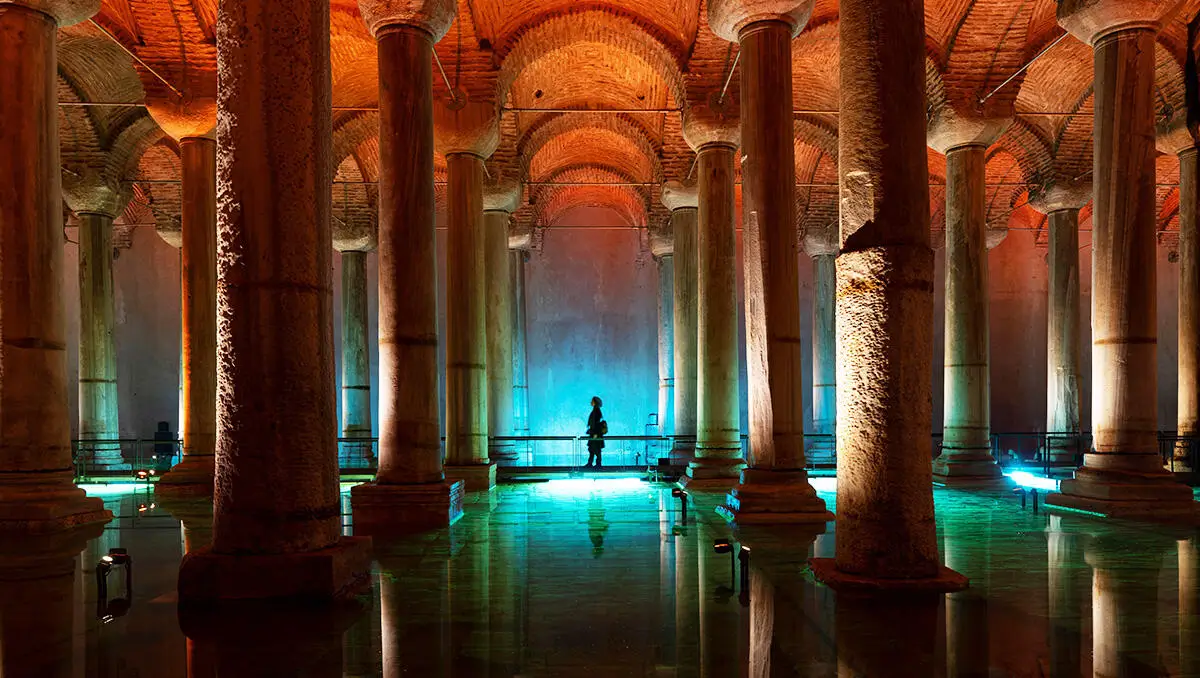
Basilica Cistern is famous for its 336 marble columns and atmospheric underground setting.
Why was Basilica Cistern built?
Basilica Cistern was created as a massive underground water reservoir for Constantinople. It helped supply water to the imperial palace complex and surrounding buildings, making it part of the city’s wider Byzantine water system.
With an estimated water storage capacity of about 80,000 tons, the cistern was one of the largest covered reservoirs in the city. Its underground design helped protect the water supply and keep it available even during difficult periods.
Key historical facts
Built: 6th century, during the reign of Emperor Justinian I
Original function: water storage for the Great Palace and nearby buildings
Columns: 336 marble columns, each about 9 meters high
Layout: 12 rows of 28 columns
Capacity: about 80,000 tons of water
Modern reopening: reopened to visitors in 2022 after a major restoration
History — visitor tips
Basilica Cistern is more than a photo stop. Its story connects Byzantine engineering, Ottoman Istanbul, 19th-century rediscovery and modern museum restoration. Understanding this background makes the visit much more meaningful.
Recommended visit time: 45–60 minutes
Location: Sultanahmet, Istanbul
Updated: May 2026
From Byzantine Constantinople to Ottoman Istanbul
In the Byzantine period, Basilica Cistern supported the water needs of the imperial heart of Constantinople. After the Ottoman conquest of Istanbul in 1453, the cistern continued to serve the area for a time, including the needs of Topkapi Palace and nearby buildings.
The raised walkways allow visitors to explore the ancient cistern while protecting the historic structure.
Over the centuries, the city grew above and around the ancient reservoir. The cistern became less visible in daily urban life, but it remained part of Istanbul’s hidden underground heritage.
The rediscovery by Petrus Gyllius
In the 16th century, the French scholar and traveler Petrus Gyllius documented the cistern while studying the ancient remains of Constantinople. His observations helped introduce the structure to Western readers and preserved important details about its size, columns and use.
Gyllius recorded that local people still knew about the underground space and drew water from it through openings above. His account is one of the key reasons the cistern became known again as an important ancient monument.
Architecture and reused materials
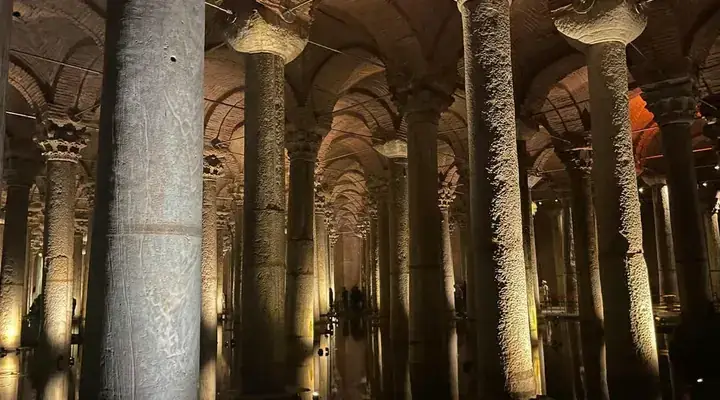
The cistern’s most impressive feature is its forest of marble columns. Many of these columns were reused from earlier Roman structures, which explains the variety of column capitals and decorative styles inside the reservoir.
The brick walls and floor were made waterproof with a thick traditional mortar, allowing the underground chamber to hold large quantities of water. The repeating columns, arches and shallow reflections create the “underground palace” atmosphere visitors see today.
The raised walkways allow visitors to explore the ancient cistern while protecting the historic structure.
The Medusa Heads and modern restoration
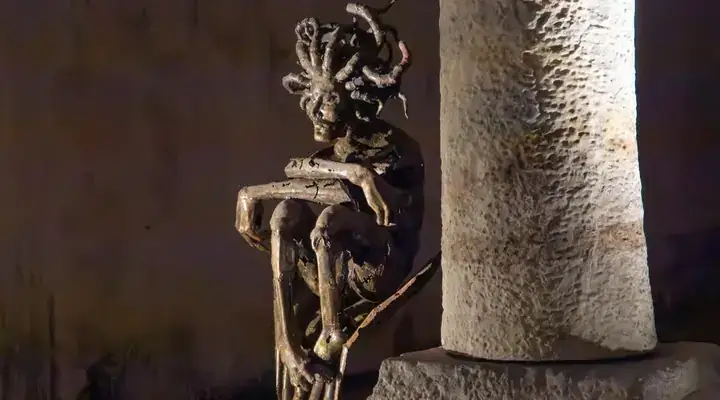
The two Medusa Head column bases are among the most famous details in Basilica Cistern. They were discovered during modern restoration work and are positioned sideways and upside down, which has made them one of the most photographed features of the site.
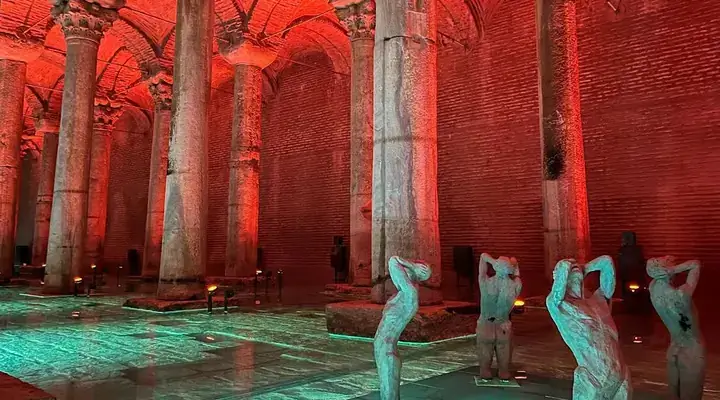
A major restoration and cleaning project took place between 1985 and 1987, when visitor platforms were added and the cistern opened to the public as a museum. After another extensive restoration, Basilica Cistern reopened to visitors on July 22, 2022, with a renewed museum experience and contemporary lighting.
What to look for during your visit
The column forest: notice how the 336 columns create long, symmetrical views through the underground space.
Different capitals: look for plain and Corinthian-style capitals reused from earlier buildings.
The Medusa Heads: find the sideways and upside-down heads in the western part of the cistern.
Water reflections: the shallow water and lighting help show why the site is called the “Sunken Palace”.
Restoration details: the modern walkways and lighting are part of the recent museum presentation.
How to experience the history better
For a stronger visit, read a short historical overview before entering or choose a ticket with an audio guide. Basilica Cistern is compact, but its story is layered, and small details such as reused columns, brick vaults and Medusa bases are easier to appreciate when you know what to look for.
Frequently Asked Questions
Basilica Cistern — FAQ
Basilica Cistern was built in the 6th century during the reign of Eastern Roman Emperor Justinian I, who ruled from 527 to 565. It was created as a large underground water reservoir for the Great Palace of Constantinople and nearby imperial buildings.
Basilica Cistern is often called the “Sunken Palace” because of its many marble columns rising from the water. The underground space looks more like a hidden palace hall than a simple water reservoir.
Basilica Cistern was originally used to store and distribute water for the imperial palace area of Byzantine Constantinople. After the Ottoman conquest, it continued to be used for a time to support nearby buildings, including the Topkapi Palace area.
The cistern was documented in the 16th century by the French scholar Petrus Gyllius. His notes helped bring wider attention to the ancient underground reservoir and preserved important details about its size and structure.
Basilica Cistern reopened to visitors on July 22, 2022, after one of the most extensive restorations in its history. The renewed museum experience includes modern walkways, lighting and cultural event use.